Essential Place of Service Codes List for Medical Billing
Are you struggling to navigate the complex world of place of service codes in medical billing? This guide provides a comprehensive list of essential place of service codes, explains their impact on reimbursement rates, and offers strategies for accurate tracking. You’ll learn to differentiate between in-office and telehealth services, understand the role of these codes in compliance, and stay updated on recent changes. By mastering place of service codes, you’ll enhance your billing accuracy and optimize reimbursement for your medical practice.
Identify Key Place of Service Codes for Medical Billing Needs

Accurate place of service coding is a critical skill in medical billing. This section examines common code examples, insurance-specific requirements, geographic variations, and the ethics of proper code selection. Understanding these factors ensures precise billing for various care facilities, from hospitals to x-ray places near you, ultimately impacting reimbursement in the health marketplace.
Review Commonly Used Place of Service Code Examples
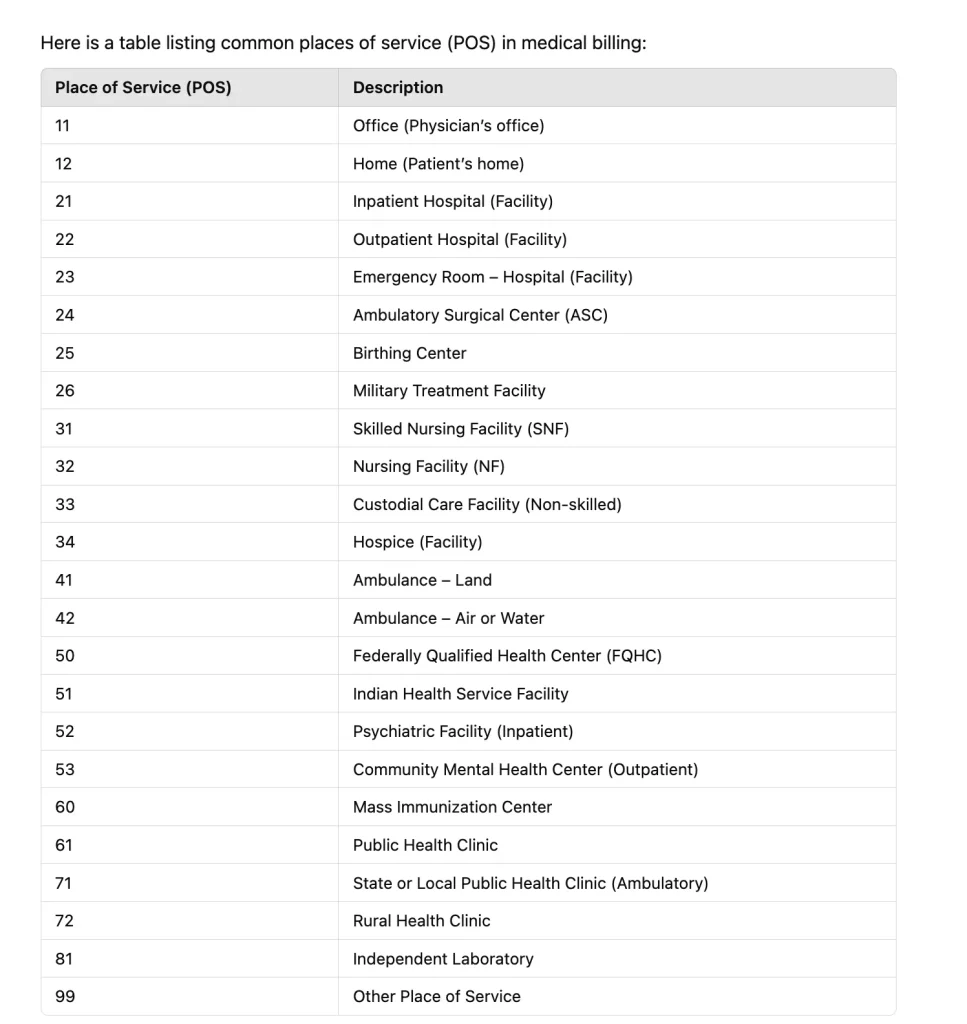
Medical billing professionals must familiarize themselves with commonly used Place of Service (POS) codes to ensure accurate revenue capture. These codes encompass various healthcare settings, including communityhealth centers, vocational education facilities, and locations where injurytreatment occurs. Proper code selection not only impacts reimbursement but also reflects the practitioner’s credential and adherence to billing standards. Understanding and correctly applying these codes is essential for maintaining compliance and maximizing revenue in diverse healthcare environments.
Analyze Specific Insurance Requirements for Coding
Medical billing specialists must pay close attention to insurance-specific requirements when coding place of service. Different insurers may have varying guidelines for emergency services, telecommunications-based care, or medication administration settings. Understanding these nuances ensures accurate billing and prevents claim denials, ultimately optimizing reimbursement for healthcare providers.
Understand Geographic Variations in Place of Service Codes
Geographic variations in Place of Service codes can significantly impact medical billing practices. The American Medical Association emphasizes the importance of understanding regional differences in healthcare delivery settings, particularly for substance abusetreatment facilities. Effective communication between billing professionals and healthcare providers ensures accurate fee determination based on location-specific chargemaster rates. Recognizing these variations helps maintain compliance and optimize reimbursement across diverse geographic areas.
Discuss Importance of Accurate Code Selection
Accurate Place of Service (POS) code selection is crucial for healthcare providers to ensure proper reimbursement and compliance with billing regulations. Whether billing for TRICARE, assisted living facilities, or services aligned with World Health Organization standards, precise coding impacts the entire invoicing process. Healthcare professionals must stay updated on POS codes to accurately reflect the setting where services are rendered, as this directly affects payment rates and claim processing efficiency.
The codes were clear. Now the money mattered. Understanding how they changed rates became crucial.
Learn How Place of Service Codes Affect Reimbursement Rates

Place of Service codes significantly influence reimbursement rates in medical billing. This section examines how coding impacts patientinsurance payments, explores billing modifications across different healthcare settings, and outlines steps for proper code usage. Understanding these aspects is crucial for healthcare providers and outsourcing companies managing medical billing workflows, especially when dealing with diverse environments such as prisons or exam facilities.
Examine Impact of Coding on Patient Insurance Payments
Accurate coding of Place of Service significantly impacts patientinsurance payments and overall reimbursement rates. Healthcare providers must focus on clinical documentation improvement to ensure proper coding, especially for services related to alcoholtreatment or computer-based healthcare delivery. Healthinsurance companies often use interactive voice response systems to verify Place of Service codes, making precise coding crucial for timely and accurate claim processing.
Understand How Different Settings Modify Billing Details
Different healthcare settings significantly modify billing details and reimbursement rates. Rural health clinics, for instance, often have unique billing requirements compared to urban facilities. Social work services provided in various locations, such as schools or community centers, may require specific place of service codes. Pathology services performed in different settings, like hospitals or independent laboratories, also necessitate distinct coding. Insurance companies frequently use zip codes to determine appropriate reimbursement rates based on geographic location. Understanding these nuances helps healthcare providers and billing specialists ensure accurate coding and optimal reimbursement across diverse care settings.
Outline Steps to Ensure Proper Code Usage
To ensure proper Place of Service code usage, healthcare providers and certified professional coders should implement a systematic approach. This includes regular staff training on current coding guidelines, utilizing up-to-date coding resources, and conducting periodic audits to verify accuracy. Therapists and public health professionals must stay informed about code changes, particularly those affecting their specific areas of practice. Knowledge of the latest developments in medical science and coding standards is essential for maintaining compliance and optimizing reimbursement across various healthcare settings.
The codes revealed their secrets. Now, the hunt for tracking strategies begins.
Explore Effective Strategies for Tracking Place of Service Codes

Effective tracking of Place of Service codes is crucial for medical billers, especially those dealing with rural health and nervous system treatments. This section explores strategies to enhance coding efficiency, including implementing specialized software, creating quick-reference guides, and establishing regular staff training. These approaches help medical billers navigate complex coding scenarios, from St. John’s rehab facilities to curriculum-based health services.
Implement Coding Software for Efficiency and Accuracy
Medical billing professionals can enhance efficiency and accuracy by implementing specialized codingsoftware. These tools streamline the process of selecting appropriate place of service codes, reducing errors and improving payment accuracy. Advanced software solutions integrate with electronic medical records, allowing health professionals to quickly access and apply the correct codes during treatment. By automating code selection based on the profession and specific healthcare setting, these systems help ensure compliance and optimize reimbursement for various medical services.
Create a Reference Guide for Quick Access to Codes
Creating a comprehensive reference guide enhances efficiency in medical billing by providing quick access to essential Place of Service codes. This guide, incorporating the International Classification of Diseases and laboratory-specific codes, serves as a valuable resource for online medical billing professionals. By organizing data in an easily accessible format, billers can swiftly locate and apply the correct codes, improving accuracy and expediting reimbursement processes.
Establish Regular Training for Billing Staff
Regular training for billing staff is crucial for maintaining accuracy in tracking Place of Service codes within the healthcommunity. Effective training programs should cover the use of billingsoftware, updates in coding practices for various medical specialties including urinary system treatments, and the potential consequences of coding errors, such as consequential damages. By investing in ongoing education, healthcare organizations can ensure their billing staff remains proficient in applying the correct codes across diverse healthcare settings, ultimately improving reimbursement rates and reducing claim denials.
Codes revealed their secrets. Now, the distinction between office visits and telehealth beckoned.
Clarify Differences Between in-Office and Telehealth Services

Understanding the distinctions between in-office and telehealth services is crucial for accurate medical billing. This section examines telehealth-specific codes, compares billing practices, and analyzes guidelines for dosage and location-specific codes. Healthcare professionals must navigate these differences to ensure proper reimbursement and compliance with the Healthcare Common Procedure Coding System, considering factors such as patient care, overhead costs, and national certification requirements in the evolving healthcare industry.
Identify Telehealth-Specific Codes for Remote Services
Medical billing professionals must identify specific telehealth codes for remote services to ensure accurate reimbursement. These codes differ from those used for in-office visits, reflecting the unique nature of virtual healthcare delivery. Medicare claims for telehealth services require distinct place of service codes, which impact the salary of healthcare providers, including registered nurses. Proper coding not only affects billing accuracy but also ensures compliance with healthcare regulations in remote office settings.
Compare in-Office and Telehealth Billing Practices
Medical billing practices for in-office and telehealth services differ significantly, requiring careful management and understanding by health care providers. While federally qualified health centers may use similar codes for both types of services, the place of service codes and documentation requirements often vary. Medical billing and medical coding professionals must adapt their practices to accommodate these differences, ensuring accurate reimbursement and compliance with regulations for each service type.
Analyze Guidelines for Dosage and Location-Specific Codes
Medical billing professionals must analyze guidelines for dosage and location-specific codes to accurately bill for rehabilitation services and physical therapy. These guidelines often differ between in-office and telehealth settings, impacting diagnosiscoding and reimbursement rates. Proper understanding of these codes ensures correct billing for services provided on various types of property, such as healthcare facilities or patient homes, and supports appropriate employment practices for healthcare providers.
Codes spoke volumes. Place of service told a deeper story.
Assess the Role of Place of Service Codes in Compliance

Place of Service codes play a crucial role in medical billing compliance for health facilities, including outpatient hospitals and surgery centers. This section examines regulatory standards for accurate coding, implements best practices to maintain compliance with Medicaid and other payers, and reviews the consequences of incorrect code usage. Understanding these aspects ensures proper reimbursement and adherence to healthcare regulations.
Examine Regulatory Standards for Accurate Coding
Regulatory standards for accurate coding in health care settings require strict adherence to place of service guidelines. These standards encompass various healthcare environments, from emergency departments to homeless shelters, ensuring proper evaluation and billing practices. For instance, unique coding considerations apply when treating Alaska Natives in specialized facilities, emphasizing the importance of location-specific knowledge in maintaining compliance with federal and state regulations.
Implement Best Practices to Maintain Compliance
Healthcare providers can implement best practices to maintain compliance with Place of Service (POS) codes by establishing comprehensive training programs for billing staff. These programs should cover the intricacies of POS codes across various settings, including colleges, nuclear medicine facilities, and healthinsurance marketplace scenarios. Regular audits of coding practices, especially for complex programs or specialized services, help ensure accuracy and adherence to regulatory standards.
Review Consequences of Incorrect Code Usage
Incorrect usage of Place of Service codes can lead to severe consequences for healthcare organizations, impacting their compliance and financial stability. Misuse of these codes, particularly in areas involving technology-driven medicine or specialized treatments for the endocrine system, may result in claim denials, delayed reimbursements, or even accusations of fraud. Healthcare organizations must prioritize accurate coding to avoid potential legal issues, fines, and damage to their reputation, especially when dealing with complex procedures like immunizations or advanced medical technologies.
Place of service codes hold secrets. New changes beckon, promising deeper insights.
Update Knowledge on New Changes in Place of Service Coding

Staying current with Place of Service coding changes is crucial for medical billing professionals. This section explores recent regulatory updates, trends in code usage, and educational opportunities to enhance certification and revenue cycle management skills. Understanding these developments ensures accurate accounts receivable processing and proper coding across various healthcare settings, from anatomy labs to languagetherapy clinics.
Investigate Recent Updates From Regulatory Agencies
Medical billers must stay informed about recent updates from regulatory agencies regarding Place of Service codes. These updates often impact various healthcare settings, including nursing homes and Indian Health Service facilities. Agencies such as the Centers for Medicare & Medicaid Services regularly release statistics and guidelines that affect primary carecoding practices. By keeping abreast of these changes, medical billers can ensure accurate coding and optimal reimbursement for healthcare providers across different settings.
Follow Trends in Place of Service Code Usage
Medical billing professionals with an associate degree in healthcareeducation must stay current on trends in Place of Service code usage for urgent care centers and other clinical settings. By monitoring changes in current procedural terminology and place of service codes, billers can ensure accurate reimbursement for healthcare providers. This ongoing education helps maintain compliance with evolving regulations and optimizes revenue cycle management in various healthcare facilities.
Participate in Workshops to Stay Current With Coding Guidelines
Medical billing professionals can enhance their knowledge of Place of Service coding guidelines by participating in workshops focused on CPT updates and Medicare Advantage regulations. These educational sessions, often offered by organizations like the National Healthcareer Association, provide valuable insights into the latest pharmacology-related coding changes and their impact on billing practices. By attending such workshops, billers can improve their productivity and ensure accurate reimbursement across various healthcare settings.
Essential Place of Service Coding Tips for Accurate Medical Billing
Place of Service codes are critical for accurate medical billing, directly impacting reimbursement rates and compliance across diverse healthcare settings. Proper code selection requires understandinginsurance-specific requirements, geographic variations, and the nuances between in-office and telehealth services. Effective tracking strategies, including specialized software and regular staff training, are essential for maintaining coding accuracy and efficiency. Staying current with regulatory updates and industry trends is crucial for healthcare providers and billing professionals to ensure optimal reimbursement and avoid potential legal and financial consequences.
Learn more about our services on our Pre-Authorization Assistance page.
Visit our services for more details.
Visit our homepage for more details. easycarebilling.com. Contact us Today @ 502-514-9155
Instagram: https://www.instagram.com/medicalbillling/
Twitter: https://twitter.com/vicky_easycare